Final Analysis
Preening
Tiffany Nguyen & Nicole Xie
Dec 12, 2021

Abstract
The product we are surveying on is a hand sanitizer spray from a company named Preening that is based at New York. Preening’s products feature all natural, non-toxic ingredients, and eco-friendly packaging. One of their products, hand sanitizer spray, has an easy to carry yet delicate design (picture below). However, the brand is a fairly new luxury product and not well-known, so it can be hard to compete with other hand sanitizers on the market. Thus, the purpose of this analysis is to understand the current marketing for this product, and what our target customers(luxury beauty product lovers) think about the price, the packaging design, moisturizer, and the volume of the product, which is also the attributes of our product. The design of our survey is using logit model which Dr.Helveston build in R as a package. Key insights we found are consumers tend to choose

Introduction
The hand sanitizer and hand cream market had a remarkable increase on post COVID-19 and even more after the pandemic exploded. People are more serious about washing and cleansing their hands regularly. At the same time, it is very important that women are likely to take more care about moisturizing their hand skin after using a high percentage of alcohol sanitizer during the day. Preening is a luxury hand cleanser brand that features all natural ingredients that will not leave your hands with harsh feelings, and it is also known for its eco-friendly packaging because the products are recyclable and refillable. The most outstanding feature of this product comparing to other products is that Preening comes with moisturize, which keeps your hand clean and also leave a good amount of moisture. Preening Hand Cleanser & Purified contains all natural ingredients such as Organic Aloe Leaf, Organic Coconut, Witch Hazel, Organic Jojoba Seed, Rose Flower, Sunflower Seed, Rosemary Leaf, and etc. Along with all that the product promises there are no animal testing, no artificial fragrances, paraban, sulfates, or any harmful chemicals that may harm your hands or the environment. Preening comes with three types of cream: Hydrating Hand Mist, Hand Cleanser and Purifier Refill, and Hand Cleanser and Purifier On-the-go Spray. Because Preening is a new brand, so we decided to focus on price, bottle design, volume, and moisturizer to have a better understanding of how customers value each attribute, and help the company to make a decision of what changes they need to make in order to gain a high market value. Hence, in this report, we will present how the survey was designed, what data we collected, how we analyzed the data, visualized the results, and most importantly, what insights we get from the results.

Survey Design
The eligible requirements to participate in this survey are “older than 18”, and “confirming to read and understand the information/ policy/ purposes of doing the survey. The reason we decided to put “older than 18 years old” is because people, who take the survey, are able to take responsibility for themselves seriously. They will not use our survey for a wrong purpose. Also, people who use hand sanitizer, and value or are interested in luxury beauty products will be consider as eligible respondents in the survey. To be more detailed, we want to find people who at least use hand sanitizer regularly, and who at least own or know one luxury beauty product. We collected age range, gender, race, and income from the respondents.These types of questions will show us what kind of customers are interested in the products (Eg: students or influencer). The Education information our team presented to the respondents were explanation of four attributes, including price per bottle, design of the bottle, volume in oz for each bottle, and whether the bottle comes with moisturizing.
For our survey, we picked four attributes(Price, Moisturizer, Volume, Design) and each attribute has more than two levels. For Price($), because we focus on luxury beauty market, we set a high range for prices: “35”, “45”, “55”; as for Design we picked two most commonly used bottle design(“Squeeze”, “Spray”) along with Preening bottle design(“Twist Spray”); for Moisturizer is straightforward which has two levels: “Yes”, “No”; and Volume(oz) we want to select small size bottle which will be easy to carry: “1.7”, “2.0”, “2.5”. With these attributes and levels, we did not want to consider the interaction effect, because as you can see each attribute is unique and seems have no significant interaction effect with other attributes. Thus, we decide to use a D-optimal fractional factorial design. We had three alternative choices for each question and six questions in total, because after the pilot survey, we want to keep our respondents focused and it seems like four alternative was alot. The summary table of the attributes can be seen below:| Attribute | Level |
|---|---|
| Price | 35, 45, 55 |
| Volume | 1.7, 2.0, 2.5 |
| Design | Squeeze, Spray, Twist Spray |
| Moisturizer | Yes, No |
Major changes we made after the pilot survey was switching one attribute Scents to Moisturizer, because we saw Scents would only add noise to the model compared to Moisturizer. Another major change was we reworded screen out question from daily use of handsanitizer to ever used because we want to include more respondents to ensure our sample size. We changed the size of the pictures and made sure the conjoint questions button looks neat.

Data Analysis
Sample Description
In the survey,the total sample size originally were 331, but after cleaned out some noisy respondents who did old version of survey, there were total of 245 after combing three surveys together; after cleaned out NA respondent Id, there were 219, then after filtering the incomplete choice questions, there are a total of 221 choice question respondents. After removed duplicated respondent ID, there were total of 208 respondents. Lastly, after dropped out screen out question and people who went too fast or too long, we had 168 respondent left for the modeling and analysis.
The average completion time for the survey was about six minutes. We found 86% (126 out of 168) respondents prefer to use or carry their own personal hand sanitizer and 75% (126 out of 168) respondents were using hand sanitizer daily, which indicates again as we mentioned in the introduction that the potential market for personal hand sanitizer is big. Most excitingly, in our sample, we had about 72t% of them were interested in luxury beauty products, which matches our targeted audiences for the study.
In terms of demographic, in general, we had a sample of balanced gender(men 78 vs women 79), majority white, mostly under 40’s, and most of them had annual income under $90,000. There are a small portion(28 respondents) who had income over 100,000 and we think could use for further analysis in terms of how high-income group think about the product.
Summary information of respondents’ demographics can be found in the table below. Sample Description
Sample <- c ("Total Sample Size", "Total Number of Choice Question Responses", "Total Number of Respndents after Removed Duplicated Respondent ID", "Total Number of People After Dropped Out Screen Out Question")
Total <- c (245, 221,208, 163)
report.data <- data.frame(Sample, Total)
knitr::kable(head(report.data[, 1:2]), "pipe")| Sample | Total |
|---|---|
| Total Sample Size | 245 |
| Total Number of Choice Question Responses | 221 |
| Total Number of Respndents after Removed Duplicated Respondent ID | 208 |
| Total Number of People After Dropped Out Screen Out Question | 163 |
Intro Questions
Question 1: How often do you use hand sanitizer?
IntroQ1 <- c("How often do you use hand sanitizer?","","","")
IntroA1 <- c("Hourly","Three times/ Week","Depends on circumstances","Don't use at all")
Number_of_Respondents <- c(15, 141, 67, "Screen_Out")
IntroQA_1 <- data.frame(IntroQ1, IntroA1, Number_of_Respondents)
knitr::kable(head(IntroQA_1[, 1:3]), "pipe")| IntroQ1 | IntroA1 | Number_of_Respondents |
|---|---|---|
| How often do you use hand sanitizer? | Hourly | 15 |
| Three times/ Week | 141 | |
| Depends on circumstances | 67 | |
| Don’t use at all | Screen_Out |
Question 2: Do you prefer to carry your own hand sanitizer or you prefer to use the public one?
IntroQ2 <- c("Do you prefer to carry your own hand sanitizer or you prefer to use the public one?","")
IntroA2 <- c("Personal Hand Sanitizer","Public Hand Sanitizer")
Number_of_Respondents <- c(183, 40)
IntroQA_2 <- data.frame(IntroQ2, IntroA2, Number_of_Respondents)
knitr::kable(head(IntroQA_2[, 1:3]), "pipe")| IntroQ2 | IntroA2 | Number_of_Respondents |
|---|---|---|
| Do you prefer to carry your own hand sanitizer or you prefer to use the public one? | Personal Hand Sanitizer | 183 |
| Public Hand Sanitizer | 40 |
Demographic Questions
Question 1: What is your age range?
Question_1 <- c ("1) What is your age range?","","","","","","")
Answers_1 <- c(" 18 ~ 25","26 ~ 30","31 ~ 40","41 ~ 50","51 ~ 60","61 +","Prefer not to say")
Number_of_Respondents <- c(75,45,55,17,13,6,2)
QA_1 <- data.frame(Question_1, Answers_1, Number_of_Respondents)
knitr::kable(head(QA_1[, 1:3]), "pipe")| Question_1 | Answers_1 | Number_of_Respondents |
|---|---|---|
| 1) What is your age range? | 18 ~ 25 | 75 |
| 26 ~ 30 | 45 | |
| 31 ~ 40 | 55 | |
| 41 ~ 50 | 17 | |
| 51 ~ 60 | 13 | |
| 61 + | 6 |
Question 2: What is your current gender identity?
Question_2 <- c ("2) What is your current gender identity?","","","")
Answers_2 <- c("Male","Female","Non-binary", "Prefer not to say")
Number_of_Respondents <- c(102,111,3,4)
QA_2 <- data.frame(Question_2, Answers_2, Number_of_Respondents)
knitr::kable(head(QA_2[, 1:3]), "pipe")| Question_2 | Answers_2 | Number_of_Respondents |
|---|---|---|
| 2) What is your current gender identity? | Male | 102 |
| Female | 111 | |
| Non-binary | 3 | |
| Prefer not to say | 4 |
Question 3: I identify my race as:
Question_3 <-c ("3) I identify my race as:","","","","","","")
Answers_3 <- c("Asian", "African American or Black", "White (Not of Hispanic or Latino origin)","Hispanic or Latino","American Indian or Alaska Native","Native Hawaiian or Pacific Islander","Prefer not to say")
Number_of_Respondents <- c(37, 12, 130, 21, 3 ,1 ,4)
QA_3 <- data.frame(Question_3, Answers_3, Number_of_Respondents)
knitr::kable(head(QA_3[, 1:3]), "pipe")| Question_3 | Answers_3 | Number_of_Respondents |
|---|---|---|
| 3) I identify my race as: | Asian | 37 |
| African American or Black | 12 | |
| White (Not of Hispanic or Latino origin) | 130 | |
| Hispanic or Latino | 21 | |
| American Indian or Alaska Native | 3 | |
| Native Hawaiian or Pacific Islander | 1 |
Question 4: What is your annual income range (from all sources) before taxes and other deductions from pay?
Question_4 <- c ("4) What is your annual income range (from all sources) before taxes and other deductions from pay?","","","","","")
Answers_4 <- c("Less than $10,000","$10,000 - $39,999","$40,000 - $69,999","$70,000 - $99,999","More than $100,000","Prefer not to say")
Number_of_Respondents <- c(19,35,3,1,42,12)
QA_4 <- data.frame(Question_4, Answers_4, Number_of_Respondents)
knitr::kable(head(QA_4[, 1:3]), "pipe")| Question_4 | Answers_4 | Number_of_Respondents |
|---|---|---|
| 4) What is your annual income range (from all sources) before taxes and other deductions from pay? | Less than $10,000 | 19 |
| $10,000 - $39,999 | 35 | |
| $40,000 - $69,999 | 3 | |
| $70,000 - $99,999 | 1 | |
| More than $100,000 | 42 | |
| Prefer not to say | 12 |
Data Cleaning
The process starts with creating a new variable “session” and filtering out any NA in session for each survey to ensure no extra rows being included while we combining the three surveys together through Session variable. Follow by that, we started to filter out NA and duplicated respondent-ID to make sure each id represents one unique individual respondent. Then we filtered out people who didn’t finish choice questions and who don’t use hand sanitize at all(the screen out question). Also individual who went too fast on the choice questions were eliminated; People who stayed on too long (for more than 2000 minutes) were also dropped. We also filtered out respondents who did older version of the survey, which Dr.Helveston spotted on and suggested the solution What happened was we didn’t close the survey after the pilot study, and we had some classmates or us tested the survey for feedback were accidentally collected towards the final survey data, which messed up the data structure because those respondents had older version survey that had four alternative options for choice questions. We didn’t filter anyone out for the attention/practice question because we set that question as purely practice question with no ideal options. Then we convert the data into long format for and list all ID variables in the first rows of the data set.
Modeling
Our model is a Logit Model that have two continuous variables and two discrete variables. Below is our utility model:
\[u_j = \beta_1 x_j^{\mathrm{Price}} + \beta_2 x_j^{\mathrm{Volume}} + \beta_3 \delta_j^{\mathrm{Design-Spray}} + \beta_4 \delta_j^{\mathrm{Design-Squzze}} + \beta_5 \delta_j^{\mathrm{Moisturizer-Yes}} + \varepsilon_j\] After running the basic model, we got the following coefficient for each attributes:| Parameter | Coefficient | Std.Error |
|---|---|---|
| \(\beta_1\) | -0.0736 | 0.005 |
| \(\beta_2\) | 0.496 | 0.119 |
| \(\beta_3\) | 0.436 | 0.076 |
| \(\beta_4\) | 0.278 | 0.083 |
| \(\beta_5\) | 0.874 | 0.084 |
After running the mixed model, and checked the sigma value for each attributes, the model results can be seen below; we think the coefficients follow the logic that professor explained in class, which for both models, we got all negative coefficient for Price, meaning despite people know it’s a luxury product, people still are less likely to choose the higher priced options. We also did a sub-group modeling, which we used gender(male/female) and divided data based off these two group for modeling. One interesting thing to notice in the sub-group modeling is that both men and women group like moisturizer feature and women value this feature more.

Results
In the WTP plot, the first plot from left shows us with each 0.2 increase in volume(from 1.8 to 2.4), there will be a $2.5 in crease(or 5 dollars increase in total) in consumers’ willingness to pay. The second form left plot shows us consumer doesn’t want to pay any if the design changes from Spray to Twist Spray; and if we look at the next WTP-Barplot, we can see it confirmed our assumption in here, which the consumers are more willingly to pay for Spray than Twist-Spray. The last plot shows us the consumers are willing to pay up to 15 dollars max if moisturizer is added in the product. Hence Moisturizer is the key attribute besides price that drives consumers choice.

alternative | price | Volume | Design_Spray | Design_Twist_Spray | Moisture 1 | 35 | 1.7 | 0 | 1 | 0 2 | 40 | 2.5 | 0 | 0 | 1 3 | 50 | 2.0 | 1 | 0 | 0
alternative | price | Volume | Design_Spray | Design_Twist_Spray | Moisture 1 | 35 | 1.7 | 0 | 1 | 0 2 | 40 | 2.5 | 0 | 0 | 1 3 | 50 | 2.0 | 1 | 0 | 0


Key insights we generated from the results are: 61 percent chance that people will take a product with Moisturizer feature and middle priced, very few liked the product with price of $55, and few people like the product that’s cheap with Twist Spray feature but no moisturizer. Adding moisturizer and moderate price is the key driven option for consumers to choose a product.
We did sensitivity analysis to see how sensitive the outcomes to the changes in price. As we can see from the two plots below, the best price point is 35 because of the highest amount of revenue it returned. If we looked at the uncertainty for market-share, the uncertainty bond is not too wide as we can see. In terms of maximizing the revenue for design decision, we think it’s best to keep the price in the range from $30-50, once past the range will less likely to see returned revenue, although the uncertain for that is high as the uncertainty bond in the Revenue figure suggests.


Final Recommendations and Conclusions
Price is one important feature based on the results. Even though it is a luxury market and our respondents understand it’s a luxury product, the respondents still prefer relative low price for the product. The Design attribute seem not that important for the respondents. Respondents have slightly preference towards Spray and dislike towards Twist Spray. However, in the mixed logit model, sigma value from Design_Twist_Spray showed there were still some people like this, so we think the design of Twist Spray has some potentials despite what the overall results suggested. Hence, we believe this feature worth another try if we dig into who those people are, and also do a better explanation in the future survey with showing how Twist Spray works, we might get a different results.
Volume is also another importance attribute as seen in the results. However, we do need to be reminded that the core ideal of the product was something easy to care, so finding the optimal volume that satisfy consumers’ need for volume yet still easy to carry is crucial. Moisturizer is a must have and included attributes in the product, because we got a consistent results across different models for WTP, including the sub group analysis of male and female, which suggests that both men and women are really like this feature. In conclusion, our target survey respondents care more about the price and whether the product has moisturizer effects, and less about the design of the bottle.
Limitations
WTP-Space model has non-convex log-likelihood functions, and when we ran the sub-group analysis, we didn’t use multi-start, which means we are not certain that we reached the local optimal point with just one run of the mode. We don’t think the results for sub-group analysis(where we used WTP-Sapce model) were optimal results, thus probably need to remember add “multi-start” and run the model before make any final conclusion about female and male group differences for each attributes.
Appendix
knitr::opts_chunk$set(
warning = FALSE,
message = FALSE,
comment = "#>",
fig.path = "figs/", # Folder where rendered plots are saved
fig.width = 7.252, # Default plot width
fig.height = 4, # Default plot height
fig.retina = 3 # For better plot resolution
)
# Load libraries here
library(tidyverse)
library(here)
library(kableExtra)
Sample <- c ("Total Sample Size", "Total Number of Choice Question Responses", "Total Number of Respndents after Removed Duplicated Respondent ID", "Total Number of People After Dropped Out Screen Out Question")
Total <- c (245, 221,208, 163)
report.data <- data.frame(Sample, Total)
knitr::kable(head(report.data[, 1:2]), "pipe")
IntroQ1 <- c("How often do you use hand sanitizer?","","","")
IntroA1 <- c("Hourly","Three times/ Week","Depends on circumstances","Don't use at all")
Number_of_Respondents <- c(15, 141, 67, "Screen_Out")
IntroQA_1 <- data.frame(IntroQ1, IntroA1, Number_of_Respondents)
knitr::kable(head(IntroQA_1[, 1:3]), "pipe")
IntroQ2 <- c("Do you prefer to carry your own hand sanitizer or you prefer to use the public one?","")
IntroA2 <- c("Personal Hand Sanitizer","Public Hand Sanitizer")
Number_of_Respondents <- c(183, 40)
IntroQA_2 <- data.frame(IntroQ2, IntroA2, Number_of_Respondents)
knitr::kable(head(IntroQA_2[, 1:3]), "pipe")
Question_1 <- c ("1) What is your age range?","","","","","","")
Answers_1 <- c(" 18 ~ 25","26 ~ 30","31 ~ 40","41 ~ 50","51 ~ 60","61 +","Prefer not to say")
Number_of_Respondents <- c(75,45,55,17,13,6,2)
QA_1 <- data.frame(Question_1, Answers_1, Number_of_Respondents)
knitr::kable(head(QA_1[, 1:3]), "pipe")
Question_2 <- c ("2) What is your current gender identity?","","","")
Answers_2 <- c("Male","Female","Non-binary", "Prefer not to say")
Number_of_Respondents <- c(102,111,3,4)
QA_2 <- data.frame(Question_2, Answers_2, Number_of_Respondents)
knitr::kable(head(QA_2[, 1:3]), "pipe")
Question_3 <-c ("3) I identify my race as:","","","","","","")
Answers_3 <- c("Asian", "African American or Black", "White (Not of Hispanic or Latino origin)","Hispanic or Latino","American Indian or Alaska Native","Native Hawaiian or Pacific Islander","Prefer not to say")
Number_of_Respondents <- c(37, 12, 130, 21, 3 ,1 ,4)
QA_3 <- data.frame(Question_3, Answers_3, Number_of_Respondents)
knitr::kable(head(QA_3[, 1:3]), "pipe")
Question_4 <- c ("4) What is your annual income range (from all sources) before taxes and other deductions from pay?","","","","","")
Answers_4 <- c("Less than $10,000","$10,000 - $39,999","$40,000 - $69,999","$70,000 - $99,999","More than $100,000","Prefer not to say")
Number_of_Respondents <- c(19,35,3,1,42,12)
QA_4 <- data.frame(Question_4, Answers_4, Number_of_Respondents)
knitr::kable(head(QA_4[, 1:3]), "pipe")
# Welcome to our survey!
We are Graduate students from George Washington University, and we want to invite you to take part in a research study being conducted by Dr. Helveston from Engineering Management and Systems Engineering at George Washington University.
Our target population are people who are interested in luxury beauty products and hand sanitizer.
Thank you for participating in this survey, which is part of a research effort by The George Washing University. For this survey, we will ask you about your preferences for hand sanitizer.
---
# Consent form
You are invited to participate in a research project about marketing luxury beauty products. This online survey should take about 5 minutes to complete. Participation is voluntary, and responses will be kept anonymously.
Your honest responses support our project to explore the potential global hand cream market size, determining consumers’ demands/ expectations, and maintaining competitiveness within the Hand Cream Sanitizer Market. As a result, all data will be collected for the final analysis. Submission of the survey will be interpreted as your informed consent to participate and that you affirm that you are at least 18 years of age.
If you have any questions about the research, please contact the group project members Nicole Xie and Tiffany Nguyen via email at SurveyPreening@gmail.com or Professor/ Dr. Helveston at jph@gwu.edu
**_I have read and understood all the information above!_**
If you would like to participate, please answer the following questions:
I am age 18 or older
- Yes
- No
I have read and understand the above information
- Yes
- No
---
In general, are you interested in luxury beauty products?
- Yes
- No
List at least two brands name from luxury beauty products that you like the most or are currently using them.
#This is an on purpose question to screen out the people who is not interested in buying a hand sanitizer.
Do you use hand sanitizer on a regular basis?
- Yes
- No
---
# Read in the choice questions
library(tidyverse)
survey <- read_csv("https://formr.org/assets/tmp/admin/3N68Q0ojPvb5uOTjbIYWM9vI4nKr-aAe0SskROosOrjw.txt?v1634317411")
# Define the respondent ID
respondentID <- sample(survey$respID, 1)
# Create the subset of rows for that respondent ID
df <- survey %>%
filter(respID == respondentID)
# Convert df to json
df_json <- jsonlite::toJSON(df)
# Great work!
Now that you've shared a bit about yourself, we'd like you to consider a shopping scenario in which you can choose some hand sanitizers to purchase from a set of products with different features
Let's learn about these attributes:
## Price
Price refers to the full price you will pay (including taxes) for the hand sanitizes
## Design
The appearance of the hand sanitizes will be presented in images with four different types of on-the-go bottles:
- **squeeze bottle **: squeeze with a lid.
- **pump bottle**: pump
- **Spray bottle**: Spray with a cap
- **Twist Spray bottle**: Twist to open then spray, no cap
## Volume
The amount of liquid in the bottles
## Moisturizer
whether the product contains moisturizing effect that keeps skin soft
---
We'll now begin the choice tasks. On the next few pages we will show you four options of hand sanitizes with pictures match to the bottle design, which you will see four types of bottle (Squeeze, Pump, Spray, or Twist Spray)with different scents, volume, and price; then we'll ask you to choose the one you most prefer.
For example, if these were the only sanitizes available, which would you choose?
[mc_button type question with the following three options]
**Option 1**
{width=170}
**Design**: Squeeze bottle
**Price**: $45
**Volume**: 1.7 O.Z.
**Moisturizer**: Yes
**Option 2**
{width=90}
**Design**: Spray
**Price**: $ 25
**Volume**: 2.0 O.Z.
**Moisturizer**: No
**Option 3**
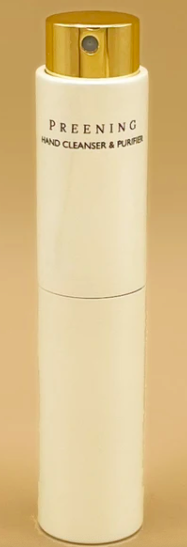{width=90}
**Design**: Twist open Spray
**Price**: $ 18
**Volume**: 1.2 O.Z.
**Moisturizer**: No
# Great work!
In the next pages,We will now show you 6 sets of choice questions and pick it only if you would want it.
---
[mc_button type question with the following Four options]
(1 of 6) If these were your only options, which would you choose?
library(dplyr)
alts <- jsonlite::fromJSON(df_json) %>%
filter(qID == 1)
alt1 <- alts %>% filter(altID == 1)
alt2 <- alts %>% filter(altID == 2)
alt3 <- alts %>% filter(altID == 3)
**Option 1**
<img src="https://user-images.githubusercontent.com/70661732/137531554-a4c7e115-5fd4-4e07-9e89-9b25d07915b7.jpg" width=100>
**Design**: `r alt1$Design`
**Price**: $ `r alt1$Price`
**Volume**: `r alt1$Volume`oz
**Moisturizer**: `r alt4$Moisturizer`
Thank you for your feedback! The next section will ask some basic questions about the hand sanitizer.
How often do you use hand sanitizer?
- Hourly
- Three times/ Week
- Depends on circumstances
- Don't use at all
{width=300}
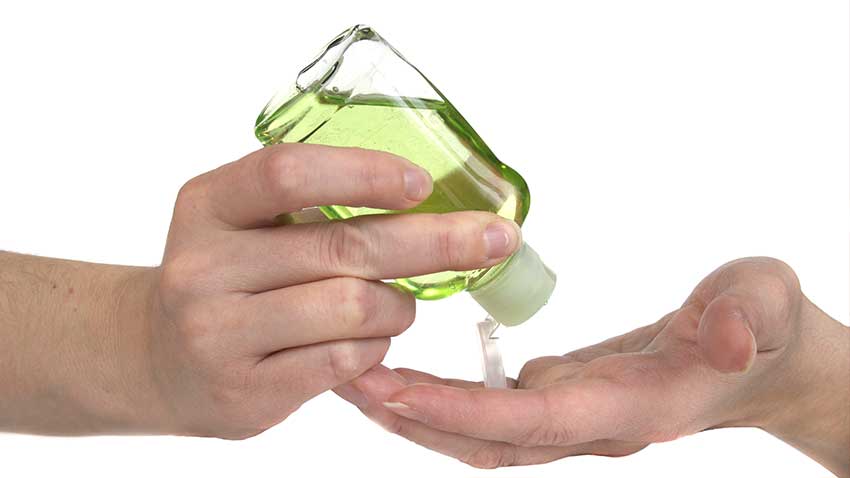
Do you prefer to carry your own hand sanitizer or you prefer to use the public one?
- Personal Hand Sanitizer
- Public Hand Sanitizer
{width=300}
{width=250}
---
## Nice job!
We're almost done! We'd just like to ask just a few more questions about you which we will only use for analyzing our survey data.
(1) What is your age range?
- 18 ~ 25
- 26 ~ 30
- 31 ~ 40
- 41 ~ 50
- 51 ~ 60
- 61 +
- Prefer not to say
(2) What is your current gender identity?
Different identity (please state):
- Male
- Female
- Non-binary
- Prefer not to say
(3) I identify my race as (select all that apply):
Different identity (please state):
- Asian
- African American or Black
- White (Not of Hispanic or Latino origin)
- Hispanic or Latino
- American Indian or Alaska Native
- Native Hawaiian or Pacific Islander
- Prefer not to say
(4) What is your annual income range (from all sources) before taxes and other deductions from pay?
- Less than $10,000
- $10,000 - $39,999
- $40,000 - $69,999
- $70,000 - $99,999
- More than $100,000
- Prefer not to say
Please let us know if you have any other thoughts or feedback on this survey.
Your feedback will help us make future improvements :)
(Open text response)
---
completionCode <- round(runif(1, 10^5, 10^6))
### Your completion code is : `r completionCode`knitr::opts_chunk$set(
warning = FALSE,
message = FALSE,
comment = "#>",
fig.path = "figs/", # Folder where rendered plots are saved
fig.width = 7.252, # Default plot width
fig.height = 4, # Default plot height
fig.retina = 3 # For better plot resolution
)
# Load libraries here
library(tidyverse)
library(here)
library(kableExtra)
Sample <- c ("Total Sample Size", "Total Number of Choice Question Responses", "Total Number of Respndents after Removed Duplicated Respondent ID", "Total Number of People After Dropped Out Screen Out Question")
Total <- c (245, 221,208, 163)
report.data <- data.frame(Sample, Total)
knitr::kable(head(report.data[, 1:2]), "pipe")
IntroQ1 <- c("How often do you use hand sanitizer?","","","")
IntroA1 <- c("Hourly","Three times/ Week","Depends on circumstances","Don't use at all")
Number_of_Respondents <- c(15, 141, 67, "Screen_Out")
IntroQA_1 <- data.frame(IntroQ1, IntroA1, Number_of_Respondents)
knitr::kable(head(IntroQA_1[, 1:3]), "pipe")
IntroQ2 <- c("Do you prefer to carry your own hand sanitizer or you prefer to use the public one?","")
IntroA2 <- c("Personal Hand Sanitizer","Public Hand Sanitizer")
Number_of_Respondents <- c(183, 40)
IntroQA_2 <- data.frame(IntroQ2, IntroA2, Number_of_Respondents)
knitr::kable(head(IntroQA_2[, 1:3]), "pipe")
Question_1 <- c ("1) What is your age range?","","","","","","")
Answers_1 <- c(" 18 ~ 25","26 ~ 30","31 ~ 40","41 ~ 50","51 ~ 60","61 +","Prefer not to say")
Number_of_Respondents <- c(75,45,55,17,13,6,2)
QA_1 <- data.frame(Question_1, Answers_1, Number_of_Respondents)
knitr::kable(head(QA_1[, 1:3]), "pipe")
Question_2 <- c ("2) What is your current gender identity?","","","")
Answers_2 <- c("Male","Female","Non-binary", "Prefer not to say")
Number_of_Respondents <- c(102,111,3,4)
QA_2 <- data.frame(Question_2, Answers_2, Number_of_Respondents)
knitr::kable(head(QA_2[, 1:3]), "pipe")
Question_3 <-c ("3) I identify my race as:","","","","","","")
Answers_3 <- c("Asian", "African American or Black", "White (Not of Hispanic or Latino origin)","Hispanic or Latino","American Indian or Alaska Native","Native Hawaiian or Pacific Islander","Prefer not to say")
Number_of_Respondents <- c(37, 12, 130, 21, 3 ,1 ,4)
QA_3 <- data.frame(Question_3, Answers_3, Number_of_Respondents)
knitr::kable(head(QA_3[, 1:3]), "pipe")
Question_4 <- c ("4) What is your annual income range (from all sources) before taxes and other deductions from pay?","","","","","")
Answers_4 <- c("Less than $10,000","$10,000 - $39,999","$40,000 - $69,999","$70,000 - $99,999","More than $100,000","Prefer not to say")
Number_of_Respondents <- c(19,35,3,1,42,12)
QA_4 <- data.frame(Question_4, Answers_4, Number_of_Respondents)
knitr::kable(head(QA_4[, 1:3]), "pipe")
# Welcome to our survey!
We are Graduate students from George Washington University, and we want to invite you to take part in a research study being conducted by Dr. Helveston from Engineering Management and Systems Engineering at George Washington University.
Our target population are people who are interested in luxury beauty products and hand sanitizer.
Thank you for participating in this survey, which is part of a research effort by The George Washing University. For this survey, we will ask you about your preferences for hand sanitizer.
---
# Consent form
You are invited to participate in a research project about marketing luxury beauty products. This online survey should take about 5 minutes to complete. Participation is voluntary, and responses will be kept anonymously.
Your honest responses support our project to explore the potential global hand cream market size, determining consumers’ demands/ expectations, and maintaining competitiveness within the Hand Cream Sanitizer Market. As a result, all data will be collected for the final analysis. Submission of the survey will be interpreted as your informed consent to participate and that you affirm that you are at least 18 years of age.
If you have any questions about the research, please contact the group project members Nicole Xie and Tiffany Nguyen via email at SurveyPreening@gmail.com or Professor/ Dr. Helveston at jph@gwu.edu
**_I have read and understood all the information above!_**
If you would like to participate, please answer the following questions:
I am age 18 or older
- Yes
- No
I have read and understand the above information
- Yes
- No
---
In general, are you interested in luxury beauty products?
- Yes
- No
List at least two brands name from luxury beauty products that you like the most or are currently using them.
#This is an on purpose question to screen out the people who is not interested in buying a hand sanitizer.
Do you use hand sanitizer on a regular basis?
- Yes
- No
---
# Read in the choice questions
library(tidyverse)
survey <- read_csv("https://formr.org/assets/tmp/admin/3N68Q0ojPvb5uOTjbIYWM9vI4nKr-aAe0SskROosOrjw.txt?v1634317411")
# Define the respondent ID
respondentID <- sample(survey$respID, 1)
# Create the subset of rows for that respondent ID
df <- survey %>%
filter(respID == respondentID)
# Convert df to json
df_json <- jsonlite::toJSON(df)
# Great work!
Now that you've shared a bit about yourself, we'd like you to consider a shopping scenario in which you can choose some hand sanitizers to purchase from a set of products with different features
Let's learn about these attributes:
## Price
Price refers to the full price you will pay (including taxes) for the hand sanitizes
## Design
The appearance of the hand sanitizes will be presented in images with four different types of on-the-go bottles:
- **squeeze bottle **: squeeze with a lid.
- **pump bottle**: pump
- **Spray bottle**: Spray with a cap
- **Twist Spray bottle**: Twist to open then spray, no cap
## Volume
The amount of liquid in the bottles
## Moisturizer
whether the product contains moisturizing effect that keeps skin soft
---
We'll now begin the choice tasks. On the next few pages we will show you four options of hand sanitizes with pictures match to the bottle design, which you will see four types of bottle (Squeeze, Pump, Spray, or Twist Spray)with different scents, volume, and price; then we'll ask you to choose the one you most prefer.
For example, if these were the only sanitizes available, which would you choose?
[mc_button type question with the following three options]
**Option 1**
{width=170}
**Design**: Squeeze bottle
**Price**: $45
**Volume**: 1.7 O.Z.
**Moisturizer**: Yes
**Option 2**
{width=90}
**Design**: Spray
**Price**: $ 25
**Volume**: 2.0 O.Z.
**Moisturizer**: No
**Option 3**
{width=90}
**Design**: Twist open Spray
**Price**: $ 18
**Volume**: 1.2 O.Z.
**Moisturizer**: No
# Great work!
In the next pages,We will now show you 6 sets of choice questions and pick it only if you would want it.
---
[mc_button type question with the following Four options]
(1 of 6) If these were your only options, which would you choose?
library(dplyr)
alts <- jsonlite::fromJSON(df_json) %>%
filter(qID == 1)
alt1 <- alts %>% filter(altID == 1)
alt2 <- alts %>% filter(altID == 2)
alt3 <- alts %>% filter(altID == 3)
**Option 1**
<img src="https://user-images.githubusercontent.com/70661732/137531554-a4c7e115-5fd4-4e07-9e89-9b25d07915b7.jpg" width=100>
**Design**: `r alt1$Design`
**Price**: $ `r alt1$Price`
**Volume**: `r alt1$Volume`oz
**Moisturizer**: `r alt4$Moisturizer`
Thank you for your feedback! The next section will ask some basic questions about the hand sanitizer.
How often do you use hand sanitizer?
- Hourly
- Three times/ Week
- Depends on circumstances
- Don't use at all
{width=300}
Do you prefer to carry your own hand sanitizer or you prefer to use the public one?
- Personal Hand Sanitizer
- Public Hand Sanitizer
{width=300}
{width=250}
---
## Nice job!
We're almost done! We'd just like to ask just a few more questions about you which we will only use for analyzing our survey data.
(1) What is your age range?
- 18 ~ 25
- 26 ~ 30
- 31 ~ 40
- 41 ~ 50
- 51 ~ 60
- 61 +
- Prefer not to say
(2) What is your current gender identity?
Different identity (please state):
- Male
- Female
- Non-binary
- Prefer not to say
(3) I identify my race as (select all that apply):
Different identity (please state):
- Asian
- African American or Black
- White (Not of Hispanic or Latino origin)
- Hispanic or Latino
- American Indian or Alaska Native
- Native Hawaiian or Pacific Islander
- Prefer not to say
(4) What is your annual income range (from all sources) before taxes and other deductions from pay?
- Less than $10,000
- $10,000 - $39,999
- $40,000 - $69,999
- $70,000 - $99,999
- More than $100,000
- Prefer not to say
Please let us know if you have any other thoughts or feedback on this survey.
Your feedback will help us make future improvements :)
(Open text response)
---
completionCode <- round(runif(1, 10^5, 10^6))
### Your completion code is : `r completionCode`Finish